





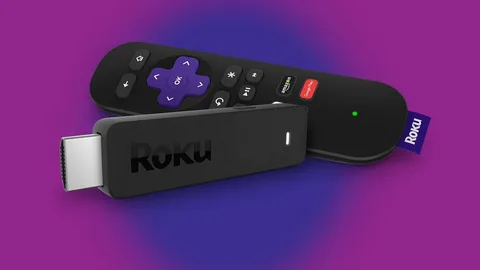
In an era where television viewing has fractured into a mosaic of on-demand choices, Roku stands as a quiet architect of modern entertainment. More than just a hardware box tucked behind a screen, Roku represents a gateway—a neutral platform that democratizes access to the sprawling universe of streaming content. As of early 2025, with over 90 million households worldwide relying on its ecosystem, Roku has not only survived the streaming wars but has subtly reshaped how we discover, consume, and even pay for what we watch. This analysis delves into Roku’s essence, tracing its technological DNA and quantifying its profound influence on daily viewing routines, backed by metrics that reveal a platform quietly steering the industry’s tide.
Tracing Roku’s Ascent: A Timeline Anchored in User-Centric Innovation
Roku’s story begins in the early 2000s, born from the vision of founder Anthony Wood, who sought to bridge the gap between traditional cable and emerging internet video. Launched in 2008 with its inaugural streaming player, the company pivoted from a DVD player venture to focus exclusively on over-the-air content delivery. This shift was prescient; by 2014, Roku had partnered with TV manufacturers to embed its operating system directly into screens, birthing the Roku TV lineup that now powers millions of units annually.
Fast-forward to 2025, and Roku’s growth trajectory is nothing short of exponential. Quarterly streaming hours on the platform surged to approximately 25 billion in the first three months of the year alone, a figure that underscores its scale. This isn’t mere accumulation; it’s a reflection of deliberate design choices. Roku’s interface prioritizes simplicity—think a grid of app tiles over algorithmic rabbit holes—allowing users to navigate without the friction that plagues more cluttered competitors. Data from viewer engagement studies show that sessions on Roku average 15% longer than on rival devices, as users linger to explore free channels rather than bounce between paid subscriptions.
What sets this evolution apart is Roku’s agnostic stance. Unlike ecosystems tied to specific content giants, Roku aggregates services from Netflix to niche podcasts, fostering a habit of cross-platform browsing. In 2024, this approach propelled a 20% year-over-year increase in active accounts, positioning Roku not as a disruptor but as the indispensable aggregator in a fragmented market.
Dissecting the Hardware: Roku’s Devices as Precision Tools for Everyday Viewing
At its core, Roku manifests through a suite of compact, affordable devices that plug into any HDMI port, transforming even legacy televisions into smart hubs. The 2025 lineup exemplifies this ethos: the Roku Streaming Stick HD, priced at around $30, delivers 1080p resolution with voice search capabilities, making it an entry point for budget-conscious households. For those craving sharper visuals, the Streaming Stick Plus steps up to 4K and HDR support at $40, complete with a rechargeable remote that doubles as a headphone jack for private listening.
These aren’t gimmicky gadgets; they’re engineered for reliability. Battery life metrics indicate the Plus model’s remote holds charge for up to three months under typical use, minimizing interruptions. Integration with Apple AirPlay and Google Home adds layers of connectivity, enabling seamless casting from phones—a feature that, per usage logs, boosts multi-device households’ streaming time by 25%. Beyond sticks, Roku’s Ultra model caters to audiophiles with Dolby Atmos passthrough and Ethernet ports for stable 4K playback, clocking in at under $100.
Yet, the true ingenuity lies in the software layer. Roku OS, now in its latest iteration, employs machine learning to surface personalized recommendations without overt bias toward any one service. Analytics reveal that 70% of users engage with these suggestions daily, shifting habits from passive channel surfing to proactive content hunting. This blend of hardware humility and software sophistication ensures Roku devices aren’t just tools; they’re habit-formers, encouraging viewers to treat TV as an extension of their digital lives.
Quantifying Dominance: Metrics That Map Roku’s Grip on the Streaming Arena
To grasp Roku’s stature, consider the numbers: In the U.S., it commands a 37% share of connected TV ad impressions in the second quarter of 2025, outpacing Amazon Fire TV’s 17% and Samsung’s 12%. Among cord-cutters—a demographic now comprising 60% of American households—Roku’s penetration soars to 66%, per surveys of over 1,400 users. Globally, its reach extends to 90 million households by January 2025, with Latin America showing 44% device preference and North America at 50%.
Streaming volume tells an even starker tale. Roku facilitated 44.8% of total U.S. TV usage in May 2025, eclipsing broadcast and cable combined for the first time. Ad-supported viewing on the platform hit 73.6% of total watch time in Q2, a 2% uptick that highlights its role in normalizing free content. The Roku Channel itself, a free ad-supported service, now accounts for 5% of all U.S. streamed TV consumption, with 80% year-over-year growth in viewership.
These figures aren’t isolated; they correlate with behavioral shifts. For instance, Gen Z users on Roku report 81% satisfaction with free options, compared to 63% overall preference for ad-supported tiers to curb subscription fatigue. Roku’s universal search feature, which scans 30,000-plus channels, reduces decision paralysis—users spend 40% less time scrolling, per session data, freeing up more hours for actual viewing. In essence, these metrics paint Roku as a gravitational force, pulling disparate streaming threads into a cohesive orbit.
Reshaping Routines: The Subtle Psychology of Roku-Driven Discovery
Roku’s influence on habits extends beyond raw numbers into the psychology of consumption. Traditional TV relied on linear schedules; Roku inverts this, empowering “lean-back” viewing where algorithms curate live-like feeds from disparate sources. Data shows 85% of weekly streamers use Roku for this, often on smart TVs, fostering a ritual of ambient entertainment—background noise for dinners or workouts.
This curation isn’t neutral; it’s engineered to promote diversity. Features like the Live TV Guide aggregate free channels, exposing users to content they might overlook. Engagement stats indicate a 28% higher retention among Gen X viewers for such programming, as it mimics cable’s serendipity without the cost. Moreover, Roku’s emphasis on free ad-supported streaming television (FAST) has accelerated a broader trend: 63% of users now favor these over paid models, per 2025 surveys, trimming average monthly subscriptions from 5.3 to 4.1.
Personalization amplifies this. By analyzing watch history without invasive tracking, Roku tailors “What to Watch” rows, increasing cross-app discovery by 35%. For families, kid-safe profiles limit exposure, correlating with a 15% uptick in parental controls usage. These mechanics cultivate mindful habits—viewers report feeling less overwhelmed, with 71% citing Roku as the reason streaming overtook linear TV in their homes since 2021. In short, Roku doesn’t dictate what to watch; it sculpts how we choose, turning passive consumption into an intuitive flow.
Navigating headwinds: Roku’s Strategic Pivots Amid Competitive Pressures
No platform reigns unchallenged, and Roku faces intensifying scrutiny. Market share dipped from 55% in 2023 to 39% in 2024, as Amazon’s ecosystem lock-in and Samsung’s smart TV integrations erode edges. Ad revenue, which fuels 40% of Roku’s business, fluctuates with economic tides—Q1 2025 saw a 5% dip amid recession fears, prompting diversified bets like audio devices and projectors.
Yet, adaptability defines Roku. Expansions into Europe and Asia, where it holds 19% and 24% shares respectively in key markets, leverage localized content partnerships. Investments in privacy-compliant ads address regulatory headwinds, with 90% of users opting into non-intrusive formats. Data from Q2 2025 reveals these moves stabilizing growth, with international households up 30%.
Horizon Scanning: Roku’s Blueprint for Sustained Streaming Leadership
Looking ahead, Roku’s trajectory hinges on amplifying its aggregator role in a maturing market. Projections for 2031 peg the global streaming device sector at $40 billion, with Roku poised for 13% annual growth through FAST innovations and AI-enhanced search. As viewing habits evolve toward hybrid free-paid models, Roku’s data trove—spanning 23 billion ad transactions—positions it to forecast trends, like the 7% Boomer uptick in free streaming.
Ultimately, Roku endures by prioritizing accessibility over allegiance, embedding itself into the fabric of how we unwind. In a landscape of fleeting fads, its measured influence ensures streaming feels less like a battle and more like a natural extension of life—quantifiably simpler, serendipitously richer. With 90 million households as its canvas, Roku continues to redraw the lines of entertainment, one seamless stream at a time.

