
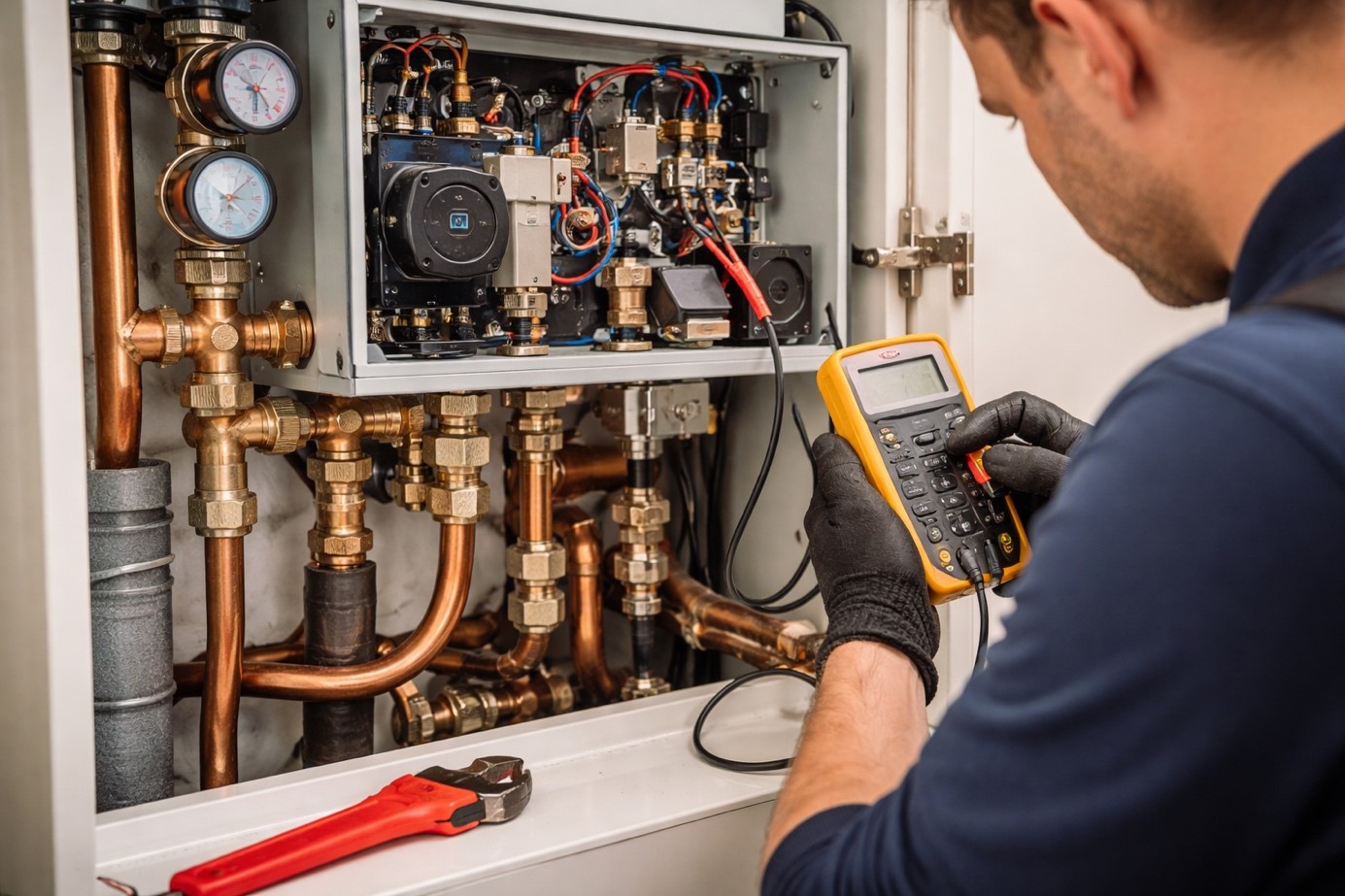
Heat Interface Units (HIUs) play a critical role in communal and district heating systems, particularly in apartment buildings and multi-occupancy developments. They provide heating and hot water directly to individual properties without the need for separate boilers. While HIUs are efficient and reliable when properly maintained, several common issues can affect their performance. Understanding these problems — and how to prevent them — is essential for landlords, property managers, and residents alike.
- Loss of Heating or Hot Water
One of the most frequent HIU issues is a sudden loss of heating or domestic hot water. This can be caused by faulty sensors, actuator valve failure, or blockages within the plate heat exchanger.
Prevention starts with regular servicing. Annual inspections help detect early signs of wear, scale build-up, or component failure before they result in a complete breakdown. Monitoring system pressure and flow rates also helps maintain consistent performance.
- Low Water Pressure
Low pressure is another common complaint in buildings using communal heating systems. It may stem from leaks, expansion vessel issues, or system imbalance.
Routine pressure checks and ensuring that expansion vessels are correctly charged can significantly reduce the likelihood of this problem. Early detection prevents strain on internal components and avoids costly emergency interventions.
- Heat Exchanger Blockages
Over time, debris and limescale can accumulate inside the plate heat exchanger. This restricts water flow, reduces efficiency, and may cause overheating or fluctuating temperatures.
Preventative measures include water quality treatment, system flushing, and installing magnetic filters where necessary. Scheduled maintenance helps identify scaling before it impacts overall system efficiency.
- Faulty Control Valves and Sensors
HIUs rely on temperature sensors and control valves to regulate heat distribution accurately. When these components malfunction, residents may experience inconsistent heating or excessive energy usage.
Replacing worn actuators and recalibrating sensors during routine servicing can prevent these disruptions. Proactive component checks are far more cost-effective than reactive repairs.
- Unusual Noises and Airlocks
Air trapped within the system can create banging or gurgling noises. Airlocks reduce heating efficiency and may cause uneven radiator performance.
Regular system bleeding and proper commissioning procedures help eliminate air build-up. Ensuring professional installation and servicing reduces the risk of recurring issues.
The Importance of Professional Maintenance
Many HIU failures are preventable with structured maintenance plans. Neglecting minor warning signs often leads to more complex and expensive repairs. Working with experienced engineers ensures accurate diagnostics, compliance with system requirements, and long-term reliability.
When faults do occur, seeking specialist support such as professional HIU repair London services ensures the issue is resolved quickly and correctly. However, the true key to performance lies in preventative care.
Conclusion
Heat Interface Units are designed for efficiency and durability, but like any mechanical system, they require regular attention. By investing in routine servicing, monitoring system health, and addressing small issues early, property owners can extend equipment lifespan, reduce energy waste, and maintain consistent comfort for occupants.
