
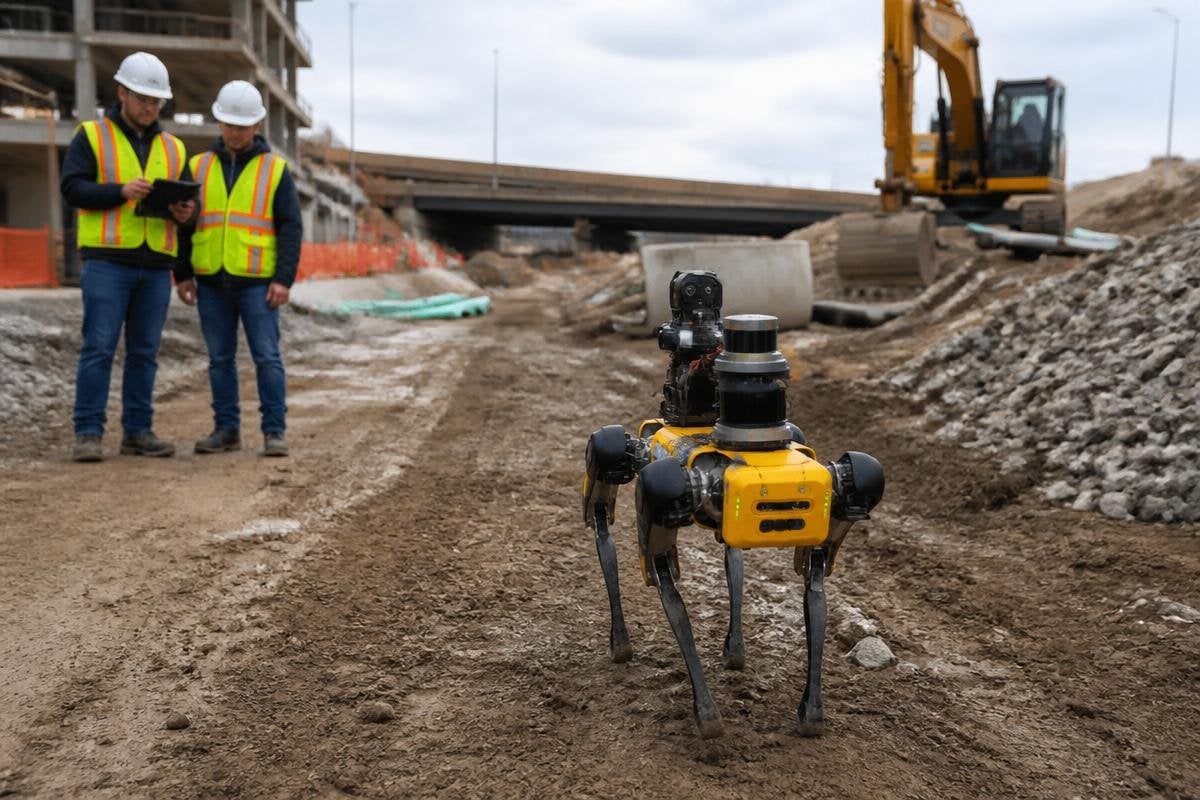
A job site changes each time a crew moves a tool, shifts a load, or clears a path. A robot that works there must read the space, choose a safe action, and adjust when the plan no longer fits.
Quick read
- Fixed routes break when the ground, objects, or people change
- Cameras and LiDAR help build a live view of the work area
- Learning systems still need clear limits, human checks, and repeatable tests
Why job sites are hard for robots
Factories give robots fixed floors, known parts, and marked work areas. A job site may have loose materials, uneven ground, changing light, temporary barriers, and people working close to the machine.
That changes the task from following a stored path to making a series of small choices. The robot must find a route, identify objects, check whether its wheels or legs have enough grip, and stop when its view or position becomes uncertain.
The word “learning” can hide several different methods. A robot may learn from recorded sensor data, practice in a computer model, or adjust its motion during a task. Those methods solve different problems, so a project should state which one it uses.
What the robot has to learn
A useful system needs a link between what its sensors see and what its hardware can do. Cameras can help identify surfaces and objects. LiDAR measures distance by sending out laser pulses, which helps the robot build a map of nearby space.
That map has to change as the site changes. A pile of boards may block a route that was clear earlier. The robot may need to move around it, wait for a worker, or ask for help instead of forcing the same motion.
Feedback from the robot’s own movement matters too. Wheel slip, joint load, motor temperature, and contact with the ground can tell the control system that its current plan is failing. A safe response might be slower movement, a new route, or stopping.
This is where simulation helps. A team can test many layouts in software before sending a robot onto a live site, then compare the simulated result with sensor data from the machine. The gap between those two sets of data is a useful warning. A model that works in a clean simulation may fail when dust, glare, loose ground, or blocked views appear.
Training is only part of the job
Learning a motion doesn’t guarantee success at the wider task. Carrying a load across level ground says little about carrying it over a slope while people pass nearby.
Tests need clear conditions. A useful report should state the surface, lighting, payload, speed, distance, number of runs, and the reasons for each stop. Without those details, a success rate has little meaning outside the test area.
The same rule applies to a video. A short clip can show that a robot completed one movement. It cannot show how often the movement failed, how much remote control was used, or what happened when the path changed.
Changing ground, tools, and work areas give a robot more tests than a fixed video can show. Robot24.com’s job-site robotics reports can tie a learning claim to the machine, task, and human help recorded on site. That evidence leads into the role people still play.
Where human control still fits
Unstructured work does not remove the need for people. It changes where people add value. A worker may mark a safe zone, approve a new route, remove an obstacle, or take control when the robot cannot identify the next step.
That handoff should be part of the design. The control screen needs to show why the robot stopped and what it needs from the operator. A vague warning creates delay; a clear prompt can let the person fix the condition and return the machine to its task.
Safety also depends on limits that learning cannot change. The system needs a defined operating area, a safe stop method, and rules for people entering the robot’s path. Those rules should stay fixed even when the robot changes its motion plan.
A practical check before deployment
Before approving a robot for a changing job site, check these points:
- Name the task: State the load, route, surface, and required handoff
- Test the changes: Move barriers, alter lighting, and add normal site clutter
- Record failures: Log stops, remote-control use, damage, and recovery time
- Set the boundary: Mark where the robot may move and where it must stop
- Check the operator: Make sure a worker can understand the alert and act
- Repeat the trial: Run the same test across enough site conditions to find weak spots
A robot that learns on a job site needs more than a training set. It needs sensor checks, limits, human control, and tests that resemble the work it will face. I’d skip any system whose results come from a clean demo with no failure record.
The useful question for the next deployment is specific: after the ground, light, route, and crew change, how often does the robot still finish the task without remote control?
